 Login
Login


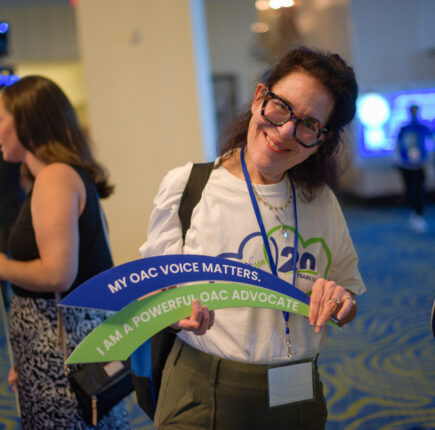 A Lifetime of Struggle
Shekinah Samaya-Thomas has lived with chronic obesity since she was 18 months old. For most of her life, she was trapped in a relentless cycle of weight loss and regain, declining health and delayed or denied access to supportive healthcare. Name a weight reduction program—she did it. Countless pounds came off, only to return, often with additional weight. Chronic obesity does not simply “go away” without treatment, and Shekinah’s experience proved that again and again. This cycle took a profound toll on her health, finances, social life and professional opportunities.
Weight bias is a cruel misconception. People living with chronic obesity are often labeled as “moral failures,” as if the condition is a personal choice. This is no different from how society once viewed alcoholism, addiction or mental health conditions. Yet weight bias touched nearly every part of Shekinah’s life: she was passed over for jobs, told to “just lose some weight,” and faced decades of social barriers. Eventually, chronic obesity made her so ill that she had to leave the workforce, unable to contribute using the education, skills and talents she had worked so hard to develop.
How Treatment Changed Her Life
In her decades of life, Shekinah has been “average weight” for less than ten years: her first year of infancy and the last eight years. What changed? Access to bariatric surgery and GLP-1 prescription treatments. After navigating long and unnecessarily complex barriers, she underwent vertical sleeve gastrectomy (VSG) surgery—a decision that saved her life. Even then, she experienced slow weight regain five to six years post-surgery, despite a total pre- and post-operative weight reduction of roughly 160 pounds.
GLP-1 medications helped Shekinah regain control. Over nearly a year, she eliminated the regained weight plus an additional 20 pounds, coming within 10–15 pounds of her personal goal of a 200-pound total weight reduction. For the first time in her life, she was medically “healthy.” Her hypertension disappeared, sleep apnea and lymphedema improved and osteoarthritis pain decreased. She returned to work, traveled freely and re-engaged socially—experiencing moments she never imagined possible, like walking around Disneyland in full Disney-bounding attire without needing an electric vehicle.
Barriers That Threaten Life and Health
In October 2024, Shekinah’s GLP-1 medication access abruptly ended. Within two weeks, she regained 15 pounds and her health deteriorated. Even after access was restored in February 2025, it took a full year to regain her previous weight and health. This is not merely inconvenient—it is life and death. Without surgery and GLP-1 treatment, she likely would not be alive today.
Now, her access is once again threatened as of January 1, 2026—and the situation is even more urgent. Because she is enrolled in Medicaid, federal regulations exclude her from the manufacturer’s Patient Assistance Program (PAP). That means she is not eligible to get her GLP-1 prescription through the program, even though the medications are currently excluded from coverage. She literally has no way to access the treatment that keeps her alive. She is appealing the discontinued coverage, but that process will take time and there is no guarantee she will be approved. For people like Shekinah, this is more than frustrating—it is a matter of survival.
Why Access to Obesity Care Matters
Access to obesity care matters not just to Shekinah, but to all Californians relying on Medi-Cal. Many recipients are among the most vulnerable members of the community, facing poverty, health disparities and social stigma. They cannot afford $300–$500 per month for life-saving medications. Properly treating chronic conditions gives patients a chance to return as contributing members of society, reducing long-term healthcare costs. Denying care costs society—not just in dollars, but in lost talent, contribution and lives.
Shekinah knows firsthand how life-changing access to obesity treatment can be. That’s why she is urging California lawmakers to protect Medi-Cal coverage for GLP-1 medications. Chronic obesity is a serious disease that requires ongoing care, just like diabetes or heart disease, and removing coverage would be a harmful setback for thousands of Californians finally receiving the treatment they need. California has the chance to lead by ensuring people living with obesity are treated with dignity and have access to life-saving care. Take action today—use OAC’s advocacy tool to urge lawmakers to keep Medi-Cal coverage of GLP-1 medications for obesity. Your voice can make a real difference.