 Login


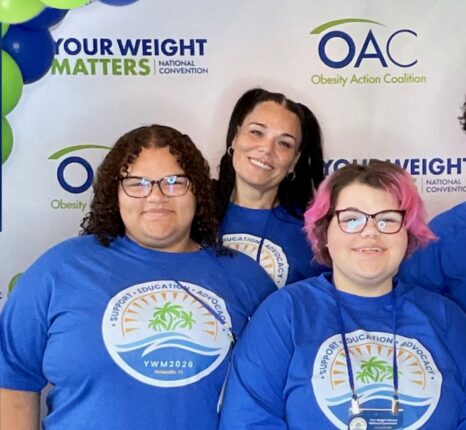 September is National Childhood Obesity Month, a time to recognize the experiences of children and families affected by obesity and the importance of compassionate care.
For Jeannie, this is personal. As a mother of two daughters affected by obesity, she has watched Annie and Abbie navigate weight bias at school, assumptions about what they can do and difficult conversations about weight and health in health care settings.
Annie and Abbie are part of OAC’s Thrive Together program, where they have connected with other teens affected by obesity and received support to attend the Your Weight Matters National Convention. These experiences have given them a place to connect, learn and share their voices with others who understand. Through it all, Jeannie has watched her daughters grow into young women who are learning to advocate for themselves and understand that their worth is not defined by their weight.
Challenging the Assumptions
For Annie and Abbie, growing up affected by obesity has meant dealing with assumptions about who they are and what they can do.
Annie remembers feeling like it was harder to be accepted by peers who were not affected by obesity. In middle school, she was teased about her weight, and when she tried to seek help from adults, those experiences were not always supportive. Over time, this affected her confidence in physical activity, clothing and her appearance.
Finding positive representation online helped Annie see people embracing their bodies rather than hiding them. It made her more comfortable in her own skin.
Abbie has faced similar assumptions, particularly as an athlete. People have questioned whether she could keep up or perform as well as someone in a smaller body.
“I’m just as good as anyone else,” Abbie said. Her experience is a reminder that body size does not determine a child’s abilities, interests or potential.
The Impact of Words
Both sisters believe the way adults talk about weight matters. Annie wishes adults understood that children and teens experience conversations about their bodies differently than adults do. Comments intended to encourage change can instead leave a young person feeling ashamed, afraid or misunderstood. She also wishes health care professionals would look at the whole person rather than assuming weight explains every health concern.
Abbie has seen how judgment can affect a young person’s confidence. She believes adults should understand that obesity is complex and that harsh words can have lasting effects.
For Jeannie, watching her daughters experience these assumptions has been one of the hardest parts of parenting.
“It is hard to watch them not get the recognition they deserve, to be underestimated or undervalued by peers and teachers,” she said. She works to remind her daughters that someone else’s bias does not determine their worth or ability.
Creating a Safe Place
While Jeannie cannot control how others treat her daughters, she can make home a place where they feel safe. She encourages Annie and Abbie to talk openly about their experiences and emotions and is honest about her own experiences with obesity. At home, conversations about health are rooted in support rather than shame.
That support has helped both girls build confidence. Annie appreciates making healthy changes as a family and staying connected with OAC. Abbie credits her family with encouraging her to pursue difficult goals without allowing other people’s expectations to define her.
“My family always believed in me and supported what I chose to do,” she said.
Finding Their Voice
Jeannie has seen how weight bias and stigma can affect mental health, particularly when they occur in places that are supposed to be safe, such as schools and health care settings. But she has also watched her daughters develop resilience.
“They are so much stronger than I was at that same age,” she said.
Both girls are learning to recognize bias and use their voices when they encounter it. Abbie encourages other young people to find supportive friends and communities.
“You belong here. You deserve to take up space just as much as anyone else,” she said.
For parents navigating similar experiences, Jeannie’s advice starts at home: “Be your child’s safe place.”
That means listening, taking their experiences seriously and reminding them that they are valued for far more than their body size. It also means learning about obesity and available treatment options so parents can advocate for their children.
What Every Child Deserves
National Childhood Obesity Month is an opportunity to talk about childhood obesity, but those conversations should never reduce children to their weight. Annie and Abbie are daughters, sisters, athletes and young people with their own interests, strengths and dreams. Their experiences with obesity are part of their stories, but they do not define who they are.
Childhood obesity is complex, and every child’s experience is different. Learn more about childhood obesity, treatment, weight bias and how you can support children and families affected by obesity.