 Login



Weight Bias in U.S. Adults
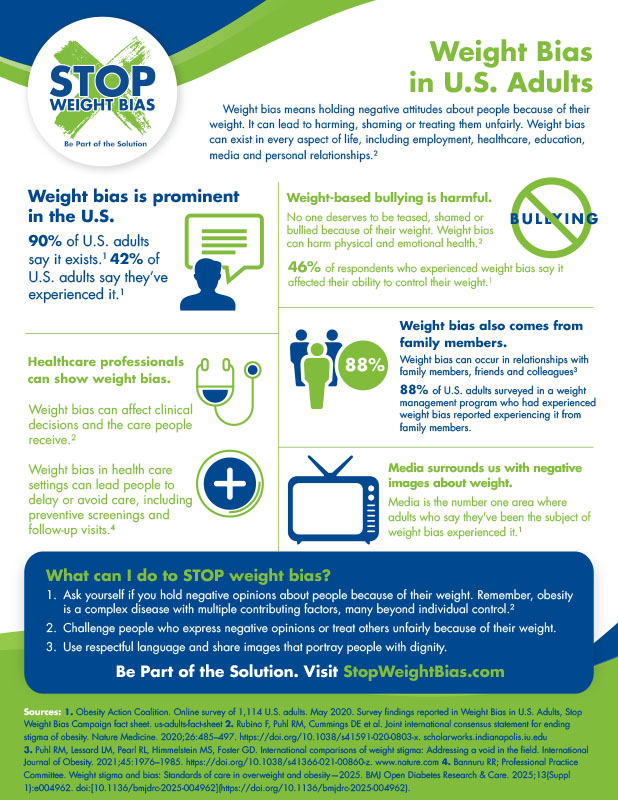
Weight bias means holding negative attitudes about people because of their weight. It can lead to harming, shaming or treating them unfairly. Weight bias can exist in every aspect of life, including employment, healthcare, education, media and personal relationships.
Weight bias is prominent in the U.S.
- 90% of U.S. adults say it exists.
- 42% of U.S. adults say they’ve experienced it.
Weight-based bullying is harmful.
No one deserves to be teased, shamed or bullied because of their weight. Weight bias can harm physical and emotional health.
- 46% of respondents who experienced weight bias say it affected their ability to control their weight.
Healthcare professionals can show weight bias.
Weight bias can affect clinical decisions and the care people receive.
Weight bias in health care settings can lead people to delay or avoid care, including preventive screenings and follow-up visits.
Weight bias also comes from family members.
Weight bias can occur in relationships with family members, friends and colleagues.
- 88% of U.S. adults surveyed in a weight management program who had experienced weight bias reported experiencing it from family members.
Media surrounds us with negative images about weight.
Media is the number one area where adults who say they’ve been the subject of weight bias experienced it.
What can I do to STOP weight bias?
- Ask yourself if you hold negative opinions about people because of their weight. Remember, obesity is a complex disease with multiple contributing factors, many beyond individual control.
- Challenge people who express negative opinions or treat others unfairly because of their weight.
- Use respectful language and share images that portray people with dignity.
Be Part of the Solution. Visit StopWeightBias.com

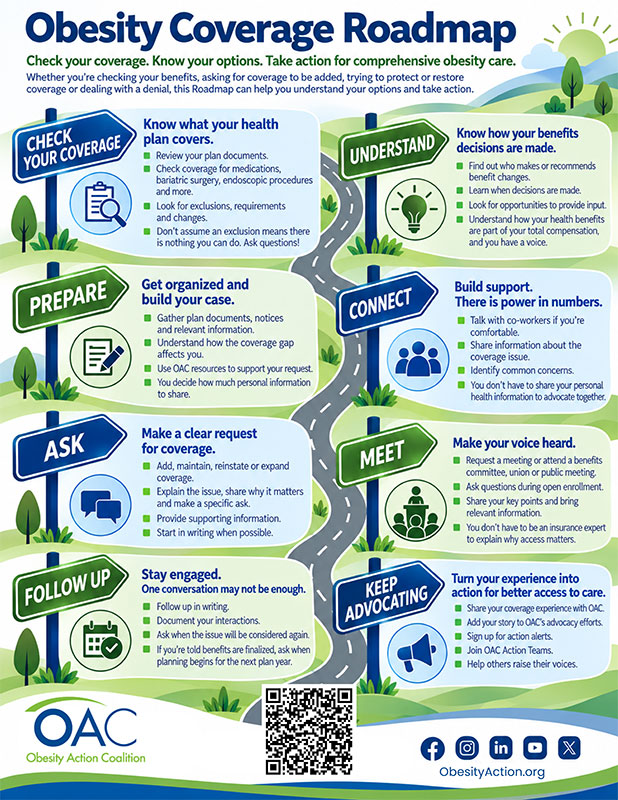
Check your coverage. Know your options. Take action for comprehensive obesity care. Whether you’re checking your benefits,…
View Guide
OAC’s white paper shares findings from a patient survey on prescription companion apps for obesity medications. Explore…
View Guide
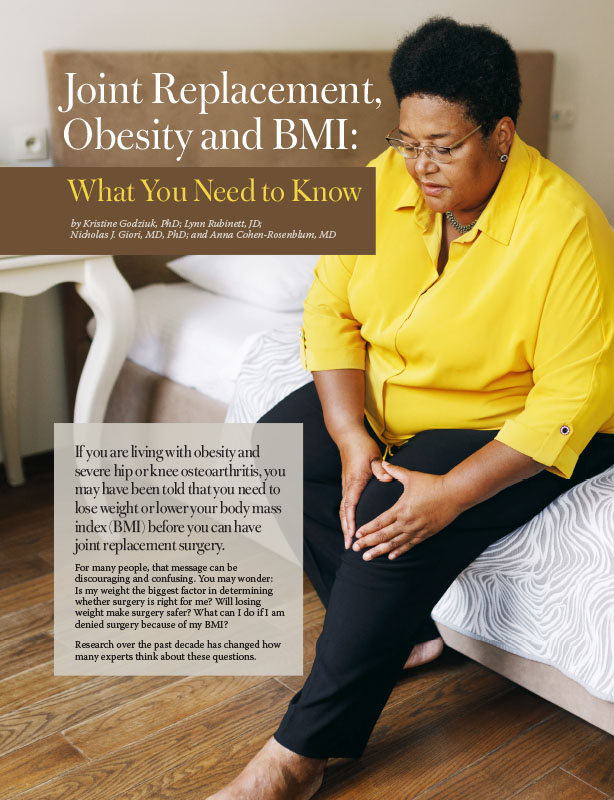
by Kristine Godziuk, PhD; Lynn Rubinett, JD; Nicholas J. Giori, MD, PhD; and Anna Cohen-Rosenblum, MD Fall…
Read Article