 Login



Weight Bias and Bullying in Children
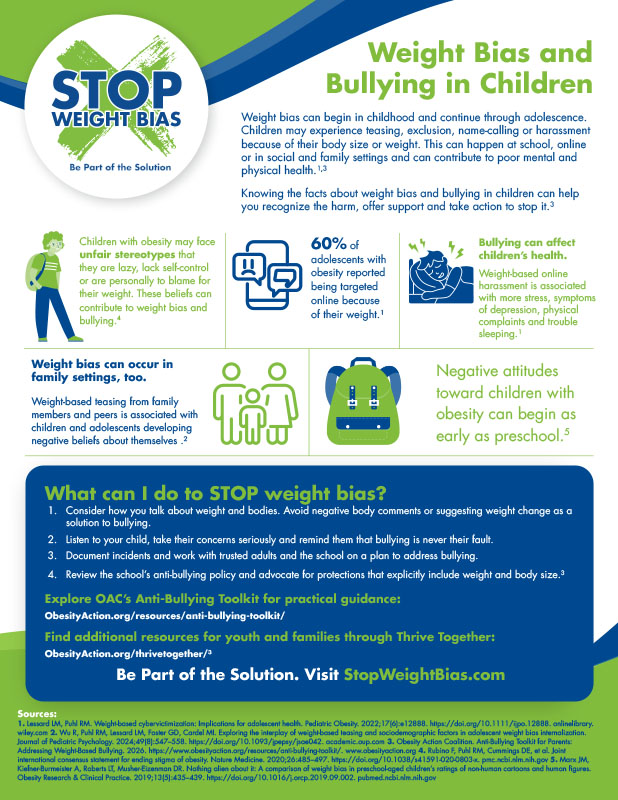
Weight bias can begin in childhood and continue through adolescence. Children may experience teasing, exclusion, name-calling or harassment because of their body size or weight. This can happen at school, online or in social and family settings and can contribute to poor mental and physical health.
Knowing the facts about weight bias and bullying in children can help you recognize the harm, offer support and take action to stop it.
- Children with obesity may face unfair stereotypes that they are lazy, lack self-control or are personally to blame for their weight. These beliefs can contribute to weight bias and bullying.
- 60% of adolescents with obesity reported being targeted online because of their weight.
Bullying can affect children’s health.
Weight-based online harassment is associated with more stress, symptoms of depression, physical complaints and trouble sleeping.
Weight bias can occur in family settings, too.
Weight-based teasing from family members and peers is associated with children and adolescents developing negative beliefs about themselves.
- Negative attitudes toward children with obesity can begin as early as preschool.
What can I do to STOP weight bias?
- Consider how you talk about weight and bodies. Avoid negative body comments or suggesting weight change as a solution to bullying.
- Listen to your child, take their concerns seriously and remind them that bullying is never their fault.
- Document incidents and work with trusted adults and the school on a plan to address bullying.
- Review the school’s anti-bullying policy and advocate for protections that explicitly include weight and body size.
Explore OAC’s Anti-Bullying Toolkit for practical guidance: ObesityAction.org/resources/anti-bullying-toolkit/
Find additional resources for youth and families through Thrive Together: ObesityAction.org/thrivetogether/
Be Part of the Solution. Visit StopWeightBias.com

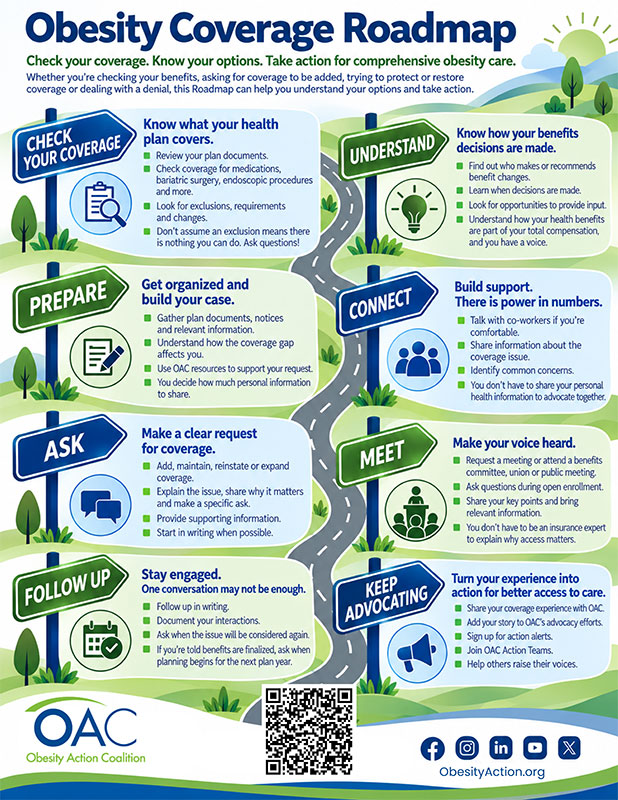
Check your coverage. Know your options. Take action for comprehensive obesity care. Whether you’re checking your benefits,…
View Guide
OAC’s white paper shares findings from a patient survey on prescription companion apps for obesity medications. Explore…
View Guide
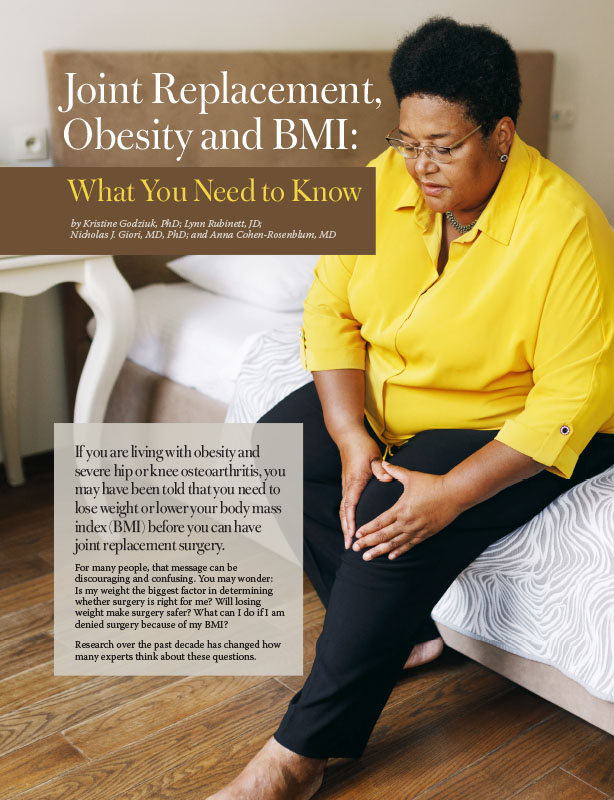
by Kristine Godziuk, PhD; Lynn Rubinett, JD; Nicholas J. Giori, MD, PhD; and Anna Cohen-Rosenblum, MD Fall…
Read Article