 Login



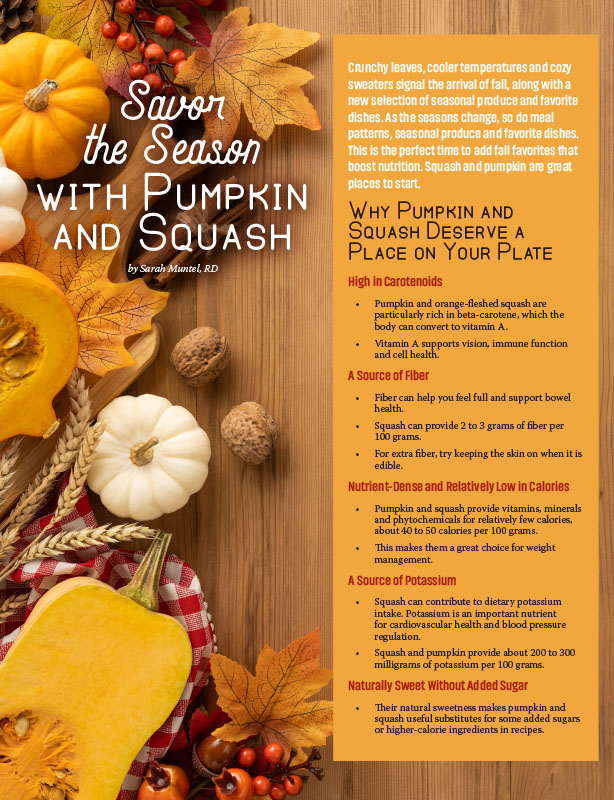
Savor the Season With Pumpkin and Squash

by Sarah Muntel, RD
Fall 2026
Crunchy leaves, cooler temperatures and cozy sweaters signal the arrival of fall, along with a new selection of seasonal produce and favorite dishes. As the seasons change, so do meal patterns, seasonal produce and favorite dishes. This is the perfect time to add fall favorites that boost nutrition. Squash and pumpkin are great places to start.
Why Pumpkin and Squash Deserve a Place on Your Plate
High in Carotenoids
- Pumpkin and orange-fleshed squash are particularly rich in beta-carotene, which the body can convert to vitamin A.
- Vitamin A supports vision, immune function and cell health.
A Source of Fiber
- Fiber can help you feel full and support bowel health.
- Squash can provide 2 to 3 grams of fiber per 100 grams.
- For extra fiber, try keeping the skin on when it is edible.
Nutrient-Dense and Relatively Low in Calories
- Pumpkin and squash provide vitamins, minerals and phytochemicals for relatively few calories, about 40 to 50 calories per 100 grams.
- This makes them a great choice for weight management.
A Source of Potassium
- Squash can contribute to dietary potassium intake. Potassium is an important nutrient for cardiovascular health and blood pressure regulation.
- Squash and pumpkin provide about 200 to 300 milligrams of potassium per 100 grams.
Naturally Sweet Without Added Sugar
- Their natural sweetness makes pumpkin and squash useful substitutes for some added sugars or higher-calorie ingredients in recipes.
There are many types of squash and pumpkin, each with a variety of uses. Do not limit yourself. Try them all.
- Pumpkin – This low-calorie choice provides potassium and beta-carotene.
Canned 100% pumpkin is a convenient, nutrient-dense option. Add it to soups, stews and oats.
- Butternut Squash – This squash is an excellent source of carotenoids, vitamin C and potassium.
Its natural sweetness and versatility make it a flavorful addition to many dishes.
- Acorn Squash – This squash is a good source of fiber and provides vitamin C, potassium and magnesium.
The edible skin adds fiber to your day.
- Spaghetti Squash – This squash is lower in calories and carbohydrates than many other winter squashes.
Use it in place of pasta to decrease calories and carbohydrates while adding nutrients.
Pumpkin Oatmeal
Adapted from: Allrecipes.com
Cool mornings call for a warm breakfast. A hearty bowl of oatmeal provides whole grains, fiber, protein and vitamin A.
Ingredients
- 1 cup quick-cooking rolled oats
- ¾ cup milk, or as needed
- ½ cup canned pumpkin puree
- ¼ teaspoon pumpkin pie spice
- 1 teaspoon cinnamon sugar
Directions
Mix the oats and milk in a microwave-safe bowl. Microwave on high for 1 to 2 minutes, stirring once. Add more milk or oats to reach the desired consistency, then cook for another 30 seconds. Stir in the pumpkin puree, pumpkin pie spice and cinnamon sugar. Heat through and serve.
Makes 2 servings
Per serving: 229 calories; 5 grams fat; 39 grams carbohydrates; 9 grams protein
Baked Chicken With Butternut Squash
Adapted from: DietitianMade.com
Try this quick, nutrient-packed, all-in-one meal. Enjoy it for dinner, then pack the leftovers for lunch the next day.
Ingredients
- 4 boneless chicken breasts, about 145 grams each
- 3 cups cubed butternut squash
- 3 cups halved Brussels sprouts
- 4 garlic cloves, minced
- 2 teaspoons chopped fresh thyme
- 1½ teaspoons chopped fresh rosemary
- 3 tablespoons olive oil
- 2 tablespoons fresh lemon juice
- ½ teaspoon sea salt
Directions
- Preheat the oven. Preheat the oven to 425 F and set a rack in the middle position. Line a large, rimmed sheet pan with parchment paper or leave it bare for deeper browning.
- Prepare the vegetables and aromatics. Peel the butternut squash, scoop out the seeds and cut the flesh into even, bite-size cubes so they cook at the same rate. Trim the dry stem ends from the Brussels sprouts, pull off any loose outer leaves and halve each one through the root. Mince the garlic cloves and finely chop the fresh thyme and rosemary.
- Roast the vegetables first. On the sheet pan, toss the squash and Brussels sprouts with olive oil, minced garlic, thyme and rosemary until everything is glossy. Spread the vegetables in a single layer, keeping the sprouts cut-side down for better color, and roast for 10 minutes. This head start allows the dense squash to soften before the chicken goes in.
- Season the chicken. Pat the chicken breasts dry with paper towels. Rub them with olive oil, a little more chopped thyme, fresh lemon juice and sea salt until evenly coated.
- Add the chicken and finish roasting. Remove the pan from the oven, push the vegetables to the edges and place the chicken breasts in the cleared center in a single layer. Return the pan to the oven and roast for 22 to 25 minutes, until the vegetables are tender and lightly caramelized and the thickest part of each chicken breast reaches 165 F on an instant-read thermometer.
- Rest and serve. Transfer the chicken to a cutting board or plates and let it rest for about 5 minutes before slicing. Spoon the roasted squash and Brussels sprouts alongside the chicken and finish with any pan juices.
Makes 4 servings
Per serving: 354 calories; 14 grams fat; 37 grams protein; 22 grams carbohydrates
Slow Cooker Butternut Squash Soup
Adapted from: Skinnytaste.com
Try this recipe on a cool fall evening. Pair it with grilled chicken or beef for added protein and a whole-grain roll for a complete meal.
Ingredients
- 32 ounces butternut squash from 1 small squash, halved and seeds removed but not peeled
- 2 large shallots, quartered
- 2 cups chicken or vegetable broth, or 1½ tablespoons Better Than Bouillon mixed with water
- ¾ cup light coconut milk, plus more for optional garnish
- Pinch of nutmeg
- Chives and pepitas for optional garnish
Directions
- Place the squash, shallots and broth in the slow cooker.
- Cook on low for 8 hours or high for 4 hours, until the squash is soft and cooked through. A knife should insert easily.
- Remove the squash from the skin and discard the peel.
- Stir in the coconut milk and nutmeg.
- Blend in a blender or with an immersion blender.
- Season to taste with salt and pepper. Garnish with more coconut milk and chives, if desired.
Makes 4 servings, 1¼ cups each
Per serving: 152 calories; 35 grams carbohydrates; 3 grams protein; 3 grams fat
Pumpkin Pie Dip
Adapted from: LaurenFitFoodie.com
Bring this fun dip to fall get-togethers and parties. Serve it with apples, pretzels or graham crackers.
Ingredients
- 8 ounces light cream cheese, softened
- 3 tablespoons sweetener of choice
- ½ cup canned pumpkin, 120 grams
- 1 teaspoon pumpkin pie spice
- ¼ teaspoon ground cinnamon
- ½ cup light whipped topping, 36 grams
Directions
- Beat the cream cheese with a hand mixer or stand mixer until smooth.
- Add the sweetener, pumpkin, pumpkin pie spice and cinnamon.
- Fold in the whipped topping. Taste and add more sweetener if desired.
- Cover and refrigerate for at least 30 minutes. For the best flavor, refrigerate for 2 to 3 hours before serving.
Makes 8 servings
Per serving: 78 calories; 5 grams carbohydrates; 2 grams protein; 6 grams fat
Savor the Season
However you choose to enjoy them, pumpkin and squash offer an easy way to bring seasonal flavor, color and nutrition to your meals. Try a new recipe, revisit an old favorite or experiment with a variety you have never prepared before. With so many possibilities, these fall favorites can add something delicious to your table all season long.
About the Author
Sarah Muntel, RD, is a registered dietitian who has worked with people pursuing surgical and medical obesity treatment for more than 20 years. She loves helping people reach their health and wellness goals! In her free time, Sarah enjoys spending time with her husband and children, watching her children’s activities, and going on walks with friends.



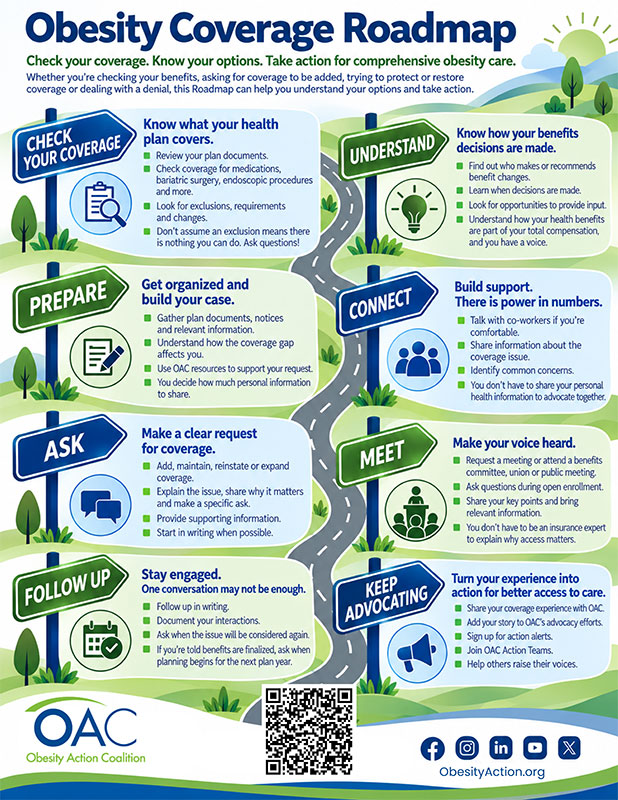
Check your coverage. Know your options. Take action for comprehensive obesity care. Whether you’re checking your benefits,…
View Guide
OAC’s white paper shares findings from a patient survey on prescription companion apps for obesity medications. Explore…
View Guide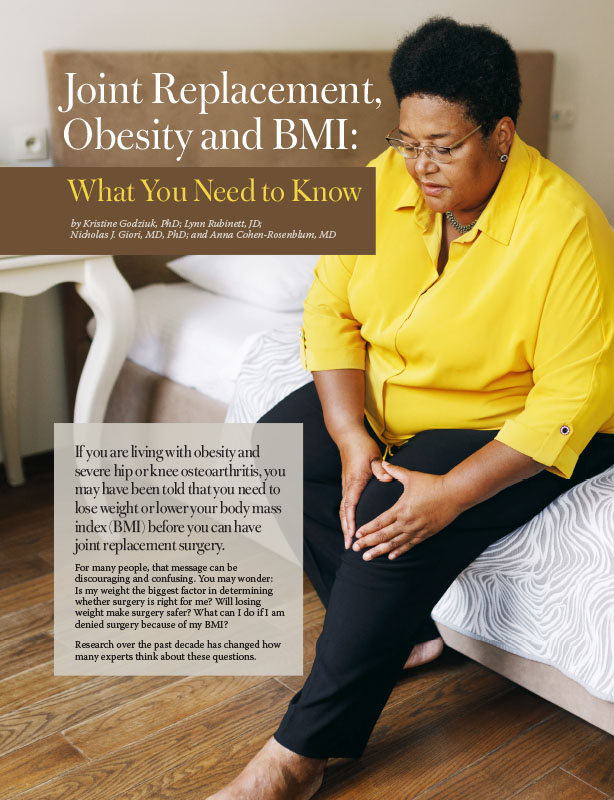
by Kristine Godziuk, PhD; Lynn Rubinett, JD; Nicholas J. Giori, MD, PhD; and Anna Cohen-Rosenblum, MD Fall…
Read Article