 Login



Obesity and Type 2 Diabetes Fact Sheet
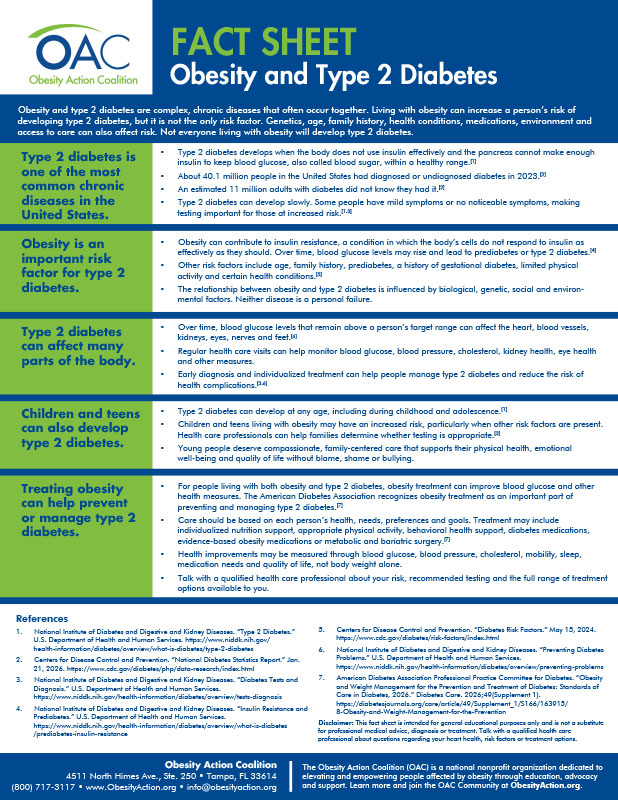
Obesity and type 2 diabetes are complex, chronic diseases that often occur together. Living with obesity can increase a person’s risk of developing type 2 diabetes, but it is not the only risk factor. Genetics, age, family history, health conditions, medications, environment and access to care can also affect risk. Not everyone living with obesity will develop type 2 diabetes.
Type 2 diabetes is one of the most common chronic diseases in the United States.
- Type 2 diabetes develops when the body does not use insulin effectively and the pancreas cannot make enough insulin to keep blood glucose, also called blood sugar, within a healthy range.
- About 40.1 million people in the United States had diagnosed or undiagnosed diabetes in 2023.
- An estimated 11 million adults with diabetes did not know they had it.
- Type 2 diabetes can develop slowly. Some people have mild symptoms or no noticeable symptoms, making testing important for those at increased risk.
Obesity is an important risk factor for type 2 diabetes.
- Obesity can contribute to insulin resistance, a condition in which the body’s cells do not respond to insulin as effectively as they should. Over time, blood glucose levels may rise and lead to prediabetes or type 2 diabetes.
- Other risk factors include age, family history, prediabetes, a history of gestational diabetes, limited physical activity and certain health conditions.
- The relationship between obesity and type 2 diabetes is influenced by biological, genetic, social and environmental factors. Neither disease is a personal failure.
Type 2 diabetes can affect many parts of the body.
- Over time, blood glucose levels that remain above a person’s target range can affect the heart, blood vessels, kidneys, eyes, nerves and feet.
- Regular health care visits can help monitor blood glucose, blood pressure, cholesterol, kidney health, eye health and other measures.
- Early diagnosis and individualized treatment can help people manage type 2 diabetes and reduce the risk of health complications.
Children and teens can also develop type 2 diabetes.
- Type 2 diabetes can develop at any age, including during childhood and adolescence.
- Children and teens living with obesity may have an increased risk, particularly when other risk factors are present. Health care professionals can help families determine whether testing is appropriate.
- Young people deserve compassionate, family-centered care that supports their physical health, emotional well-being and quality of life without blame, shame or bullying.
Treating obesity can help prevent or manage type 2 diabetes.
- For people living with both obesity and type 2 diabetes, obesity treatment can improve blood glucose and other health measures. The American Diabetes Association recognizes obesity treatment as an important part of preventing and managing type 2 diabetes.
- Care should be based on each person’s health, needs, preferences and goals. Treatment may include individualized nutrition support, appropriate physical activity, behavioral health support, diabetes medications, evidence-based obesity medications or metabolic and bariatric surgery.
- Health improvements may be measured through blood glucose, blood pressure, cholesterol, mobility, sleep, medication needs and quality of life, not body weight alone.
- Talk with a qualified health care professional about your risk, recommended testing and the full range of treatment options available to you.

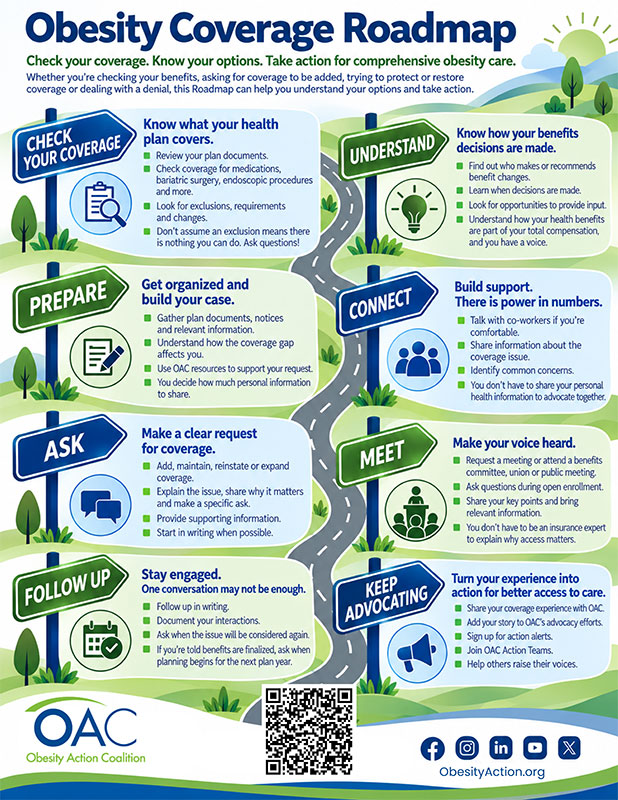
Check your coverage. Know your options. Take action for comprehensive obesity care. Whether you’re checking your benefits,…
View Guide
OAC’s white paper shares findings from a patient survey on prescription companion apps for obesity medications. Explore…
View Guide
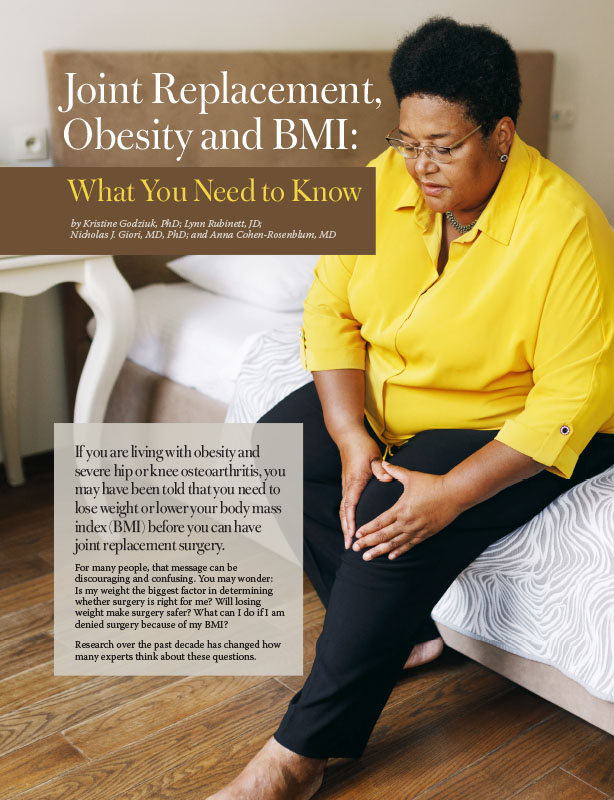
by Kristine Godziuk, PhD; Lynn Rubinett, JD; Nicholas J. Giori, MD, PhD; and Anna Cohen-Rosenblum, MD Fall…
Read Article