 Login



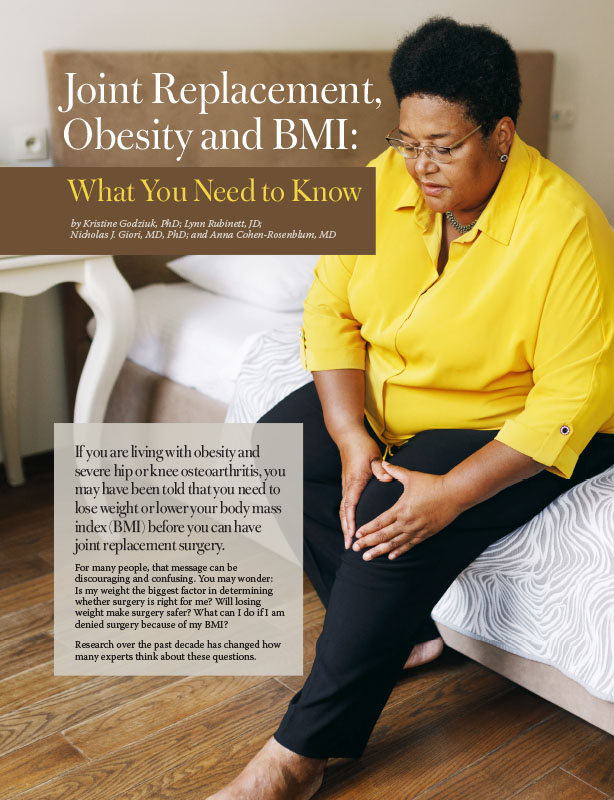
Joint Replacement, Obesity and BMI: What You Need to Know

by Kristine Godziuk, PhD; Lynn Rubinett, JD; Nicholas J. Giori, MD, PhD; and Anna Cohen-Rosenblum, MD
Fall 2026
If you are living with obesity and severe hip or knee osteoarthritis, you may have been told that you need to lose weight or lower your body mass index (BMI) before you can have joint replacement surgery.
For many people, that message can be discouraging and confusing. You may wonder: Is my weight the biggest factor in determining whether surgery is right for me? Will losing weight make surgery safer? What can I do if I am denied surgery because of my BMI?
Research over the past decade has changed how many experts think about these questions.
Can a Higher BMI Keep You from Having Joint Replacement Surgery?
For many years, some hospitals and surgeons required people to reach a BMI below 40 before offering elective joint replacement. The goal was to reduce complications after surgery.
However, these policies can also create barriers to care. Some people are unable to lose enough weight despite significant effort. While waiting to qualify for surgery, others may experience worsening pain, reduced mobility, loss of independence and declines in their overall health.
Current guidelines from the American College of Rheumatology and the American Association of Hip and Knee Surgeons no longer recommend delaying joint replacement solely because a person’s BMI is above 40. Instead, they recommend an individualized assessment and shared decision-making between you and your healthcare team.
People with obesity may have a higher risk of certain complications after joint replacement, including infection and delayed wound healing. Surgery may also require additional planning and time. Your surgeon should discuss your individual risks with you.
Research also suggests that people with obesity can experience substantial improvements in pain, mobility and quality of life after joint replacement, comparable to those experienced by people with a lower BMI.
BMI has important limitations in assessing surgical risk. Two people with the same BMI may have very different health profiles and individual risks.
Your healthcare team should consider BMI alongside other factors that can affect your risk of complications, including:
- Diabetes management
- Heart and lung health
- Nutrition
- Nicotine use
- Muscle health and strength
- Mobility
- Severity of osteoarthritis
The decision to proceed with surgery should also consider what could happen if surgery is delayed. Continuing to live with severe arthritis may lead to worsening pain, less physical activity, muscle weakness, loss of independence, financial challenges and declining mental health. Those consequences deserve consideration alongside the potential risks of surgery.
Should You Lose Weight Before Surgery?
Weight loss is often encouraged before joint replacement, but the evidence is more complicated than many people realize. Weight loss can offer health benefits as part of obesity and osteoarthritis management. It may improve blood sugar and blood pressure, reduce stress on painful joints and improve overall health. Some people also find that losing weight reduces their arthritis symptoms enough to postpone or avoid joint replacement surgery. But if you are planning to have surgery, research has not consistently shown that losing weight before joint replacement reduces the risk of surgical complications.
Researchers have studied several approaches to weight loss, including behavioral programs that reduce calorie intake and metabolic and bariatric surgery. Some studies have suggested potential benefits, while others have found little difference or even higher complication rates. Overall, the evidence remains uncertain.
This does not mean weight loss cannot be helpful for managing obesity and osteoarthritis. Instead, it means weight loss should not automatically be considered a requirement for surgery or a guarantee that surgery will be safer.
Decisions about weight management should be individualized based on your overall health, the severity of your arthritis and your personal goals.
What the Research Tells Us
BMI is only one piece of the picture. A higher BMI can increase the risk of certain complications, but BMI alone does not tell your healthcare team everything about your health or surgical risk.
Weight loss does not guarantee a safer surgery. Research has not consistently shown that losing weight before joint replacement reduces surgical complications. Weight management may still benefit your overall health and osteoarthritis symptoms.
Muscle health matters, too. Preparing for surgery is about more than weight. Maintaining muscle, getting adequate nutrition and staying physically active when possible may also be important for your recovery.
What About GLP-1 Medications Before Joint Replacement?
GLP-1 medications, including semaglutide and tirzepatide, have changed obesity treatment for many people. These medications can support meaningful, sustained weight loss and health improvements when used as part of long-term obesity care.
Researchers are studying whether these medications may also reduce the risk of complications after joint replacement surgery. Right now, the evidence is still developing and more high-quality research is needed.
If you are considering a GLP-1 medication before surgery, talk with your healthcare team about the potential risks and benefits as well as your long-term treatment plan. Obesity medications should be considered part of ongoing obesity treatment rather than simply a way to reach a specific BMI before joint replacement surgery.
Don’t Overlook Muscle Health
When considering weight management before surgery, there is another important part of your health to think about: your muscles. Weight loss, whether through changes in nutrition, GLP-1 medications or metabolic and bariatric surgery, can result in the loss of both fat and muscle mass.
Muscle loss may be particularly concerning for older adults who already have reduced muscle mass or strength, a condition known as sarcopenia. Sarcopenia can also occur alongside obesity. Losing additional muscle before joint replacement may reduce physical function and potentially affect infection risk and recovery after surgery.
For this reason, weight management before surgery should include attention to adequate nutrition, including sufficient protein, and physical activity whenever possible. Protecting muscle health can be an important part of preparing for surgery.
You Should Be Part of the Decision
No single number can capture the complexity of your health or determine your individual surgical risk. If you have been told that your joint replacement needs to be delayed or that you cannot have surgery because of your weight, consider asking your surgeon:
- What specific factors increase my surgical risk?
- Is my BMI the only reason surgery is being delayed?
- Are there other health conditions we can address before surgery?
- What are the risks of delaying surgery in my situation?
- What can I do to prepare for surgery and recovery?
Joint replacement can be more technically challenging to perform in people with a higher BMI. You may also want to consider seeking another orthopedic opinion. Surgeons can have different levels of experience performing joint replacement in people with a higher BMI.
These conversations can help ensure that the decision about whether to proceed with surgery reflects your overall health, values and treatment goals.
The Bottom Line
Obesity is a complex, chronic disease and BMI alone does not provide a complete picture of a person’s health. People with obesity may have a somewhat higher risk of certain complications after joint replacement, but they can also experience substantial improvements in pain, mobility and quality of life.
Current evidence does not clearly show that losing weight before surgery consistently reduces surgical complications, regardless of the weight-loss approach used. Weight management may still improve overall health and help some people manage arthritis symptoms, but it should be considered as one part of an individualized treatment plan rather than a universal requirement for joint replacement.
The decision about surgery should be made through shared decision-making with your healthcare team. Your surgeon should consider your complete health picture, not BMI alone, with the goal of helping you safely regain mobility, reduce pain and improve your quality of life.
About the Authors:
Kristine Godziuk, PhD, is an assistant professor of physical therapy and rehabilitation science at the University of California, San Francisco. She leads a research team of surgeons and people with lived experience working together to address challenges related to obesity and joint replacement. Learn more at accessoa.org.
Lynn Rubinett, JD, is an attorney, mediator and arbitrator in Austin, Texas. She has lived experience with hip replacement surgery and serves as a patient partner in research focused on improving access to surgical care.
Nicholas J. Giori, MD, PhD, is chief of orthopedic surgery at the Veterans Administration hospital in Palo Alto, California, and a professor of orthopedic surgery at Stanford University.
Anna Cohen-Rosenblum, MD, is an associate professor of orthopedic surgery at NYU Langone Health and specializes in hip and knee replacement. She is deputy editor-in-chief of Arthroplasty Today and will serve as the 2027-2028 president of the Ruth Jackson Orthopaedic Society, an organization that supports women in orthopedic surgery.
Related Resources



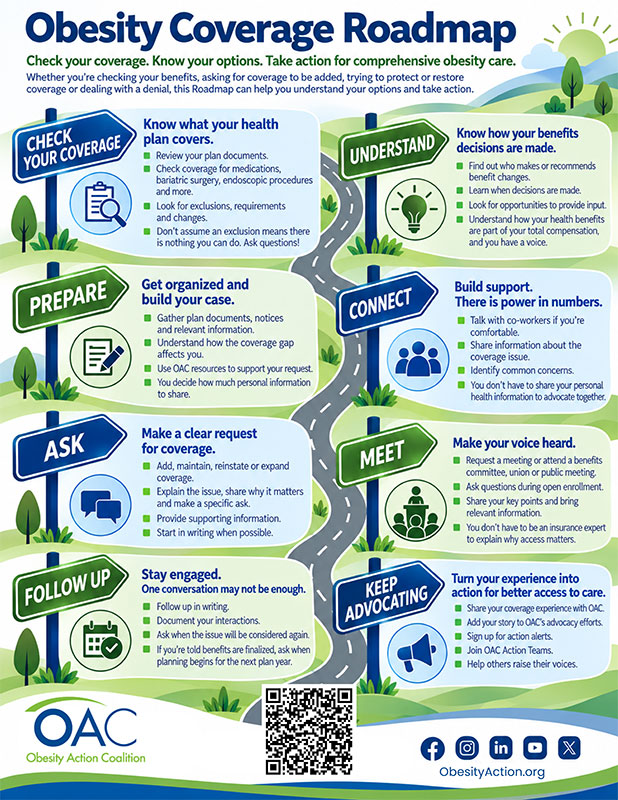
Check your coverage. Know your options. Take action for comprehensive obesity care. Whether you’re checking your benefits,…
View Guide
OAC’s white paper shares findings from a patient survey on prescription companion apps for obesity medications. Explore…
View Guide
by Sarah Muntel, RD Fall 2026 Crunchy leaves, cooler temperatures and cozy sweaters signal the arrival…
Read Article