 Login



Be the Friend Who Stands Up

by Michelle “Shelly” Vicari, OAC Director of Programs
Fall 2026
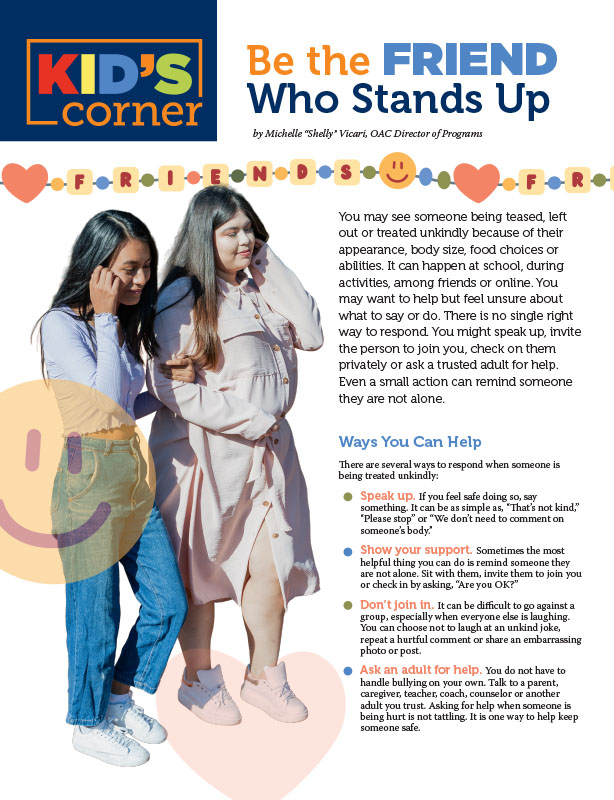
You may see someone being teased, left out or treated unkindly because of their appearance, body size, food choices or abilities. It can happen at school, during activities, among friends or online. You may want to help but feel unsure about what to say or do. There is no single right way to respond. You might speak up, invite the person to join you, check on them privately or ask a trusted adult for help. Even a small action can remind someone they are not alone.
Ways You Can Help
There are several ways to respond when someone is being treated unkindly:
- Speak up. If you feel safe doing so, say something. It can be as simple as, “That’s not kind,” “Please stop” or “We don’t need to comment on someone’s body.”
- Show your support. Sometimes the most helpful thing you can do is remind someone they are not alone. Sit with them, invite them to join you or check in by asking, “Are you OK?”
- Don’t join in. It can be difficult to go against a group, especially when everyone else is laughing. You can choose not to laugh at an unkind joke, repeat a hurtful comment or share an embarrassing photo or post.
- Ask an adult for help. You do not have to handle bullying on your own. Talk to a parent, caregiver, teacher, coach, counselor or another adult you trust. Asking for help when someone is being hurt is not tattling. It is one way to help keep someone safe.
Being a Good Friend Online Counts, Too
Group chats, texts, online games and social media can be great ways to connect with friends. But they can also be used to exclude someone or spread hurtful comments and images.
If you see a mean comment, message or photo about someone, do not like, share or forward it. Passing along hurtful content can make the situation worse, even if you did not create it.
Instead, check in with the person privately. A simple message such as “Are you OK?” or “I’m here if you want to talk” can mean a lot.
You can also encourage them to:
- Save screenshots of what happened.
- Block or report the account.
- Talk to a trusted adult.
Before You Hit Send
- Pause for a moment and ask yourself:
- Would I say this to someone’s face?
- Would I be comfortable if someone posted this about me?
- Could this message hurt or embarrass someone?
If you would not say it face to face, would not want it posted about you or think it could hurt someone, do not send it. Take a moment to reconsider what you want to say or choose not to post at all.
Friendship Challenge: What Would You Do?
What would you do in these situations? Circle the answer you think would help most.
(1) Someone at lunch makes a joke about another student’s body. What could you do?
A. Laugh because everyone else is laughing.
B. Say, “That’s not funny,” and change the subject.
C. Repeat the joke to someone else later.
(2) You see someone sitting alone after the other students have been teasing them. What could you do?
A. Invite them to sit or spend time with you.
B. Walk away because you are unsure what to say.
C. Ask if they are OK.
Hint: Sometimes there is more than one helpful answer.
(3) Your friend tells you someone is posting mean comments about their body online. What could you do?
A. Tell them to ignore it.
B. Help them save the messages, block or report the person and talk to an adult they trust.
C. Post something mean in response.
(4) Someone starts commenting on what another student is eating. What could you do?
A. Join the conversation about their food.
B. Say, “Let’s talk about something else.”
C. Say, “We don’t need to comment on what someone else is eating.”
Check Your Answers!
(1) B. Speak up and change the subject. You can interrupt an unkind moment and show the other person that someone is on their side.
(2) A or C. Invite them to join you or ask if they are OK. Both are thoughtful ways to reach out and help someone feel less alone.
(3) B. Help your friend save what happened and find support. Do not respond with another mean post. Help your friend document what happened, block or report the account and talk to a trusted adult.
(4) B or C. Change the subject or speak up. Both responses can stop the conversation and show that commenting on another person’s food is not appropriate.
Your Turn
Think about what being a supportive friend means to you.
Finish this sentence:
I can help others feel like they belong by ____________________________________.
There are many ways to stand up for someone. You can speak up when you hear something unkind, check in with someone who has been hurt or ask a trusted adult for help.
You do not have to make a big or dramatic gesture to make a difference. A small act of kindness can help someone feel supported and remind them they are not alone.
You Have Backup
If you or someone you know is being bullied, you do not have to handle it alone. The Obesity Action Coalition’s Anti-Bullying Toolkit offers practical tips to help kids, teens, families and schools understand bullying, respond when it happens and help prevent it. Ask a parent, caregiver or trusted adult to explore it with you.
For Parents and Caregivers: Bullying can affect a child’s confidence, relationships and sense of safety. Explore the toolkit with your child to learn how to recognize possible signs of bullying, begin supportive conversations and address concerns with schools or other trusted adults. Remind your child that they can come to you when something feels wrong, whether it happens in person or online. Visit ObesityAction.org/resources/anti-bullying-toolkit/ to learn more.
About the Author:
Michelle “Shelly” Vicari is the Director of Programs for the Obesity Action Coalition (OAC). She studied Child Development & Family Studies and Political Science at San Diego State University and previously served as Curriculum Director for the largest NAEYC-accredited child care centers in Southern California. At OAC, she leads a variety of education and support initiatives, including Thrive Together, a youth and families program that provides resources, community and events for children, teens and parents affected by obesity.
Related Resources

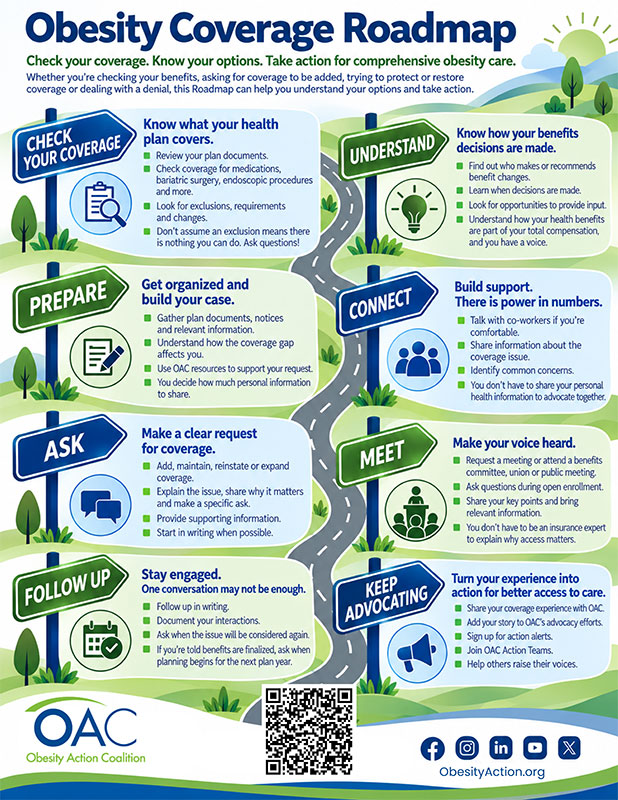
Check your coverage. Know your options. Take action for comprehensive obesity care. Whether you’re checking your benefits,…
View Guide
OAC’s white paper shares findings from a patient survey on prescription companion apps for obesity medications. Explore…
View Guide
by Kristine Godziuk, PhD; Lynn Rubinett, JD; Nicholas J. Giori, MD, PhD; and Anna Cohen-Rosenblum, MD Fall…
Read Article