 Login



Anti-Bullying Toolkit


Addressing Weight-Based Bullying
Every child deserves to feel safe, supported and respected. This toolkit can help parents and caregivers recognize weight-based bullying, respond with care and work with schools to help create safer environments for all children.
Download the printable Anti-Bullying Toolkit PDF
On This Page
- What weight-based bullying is
- Signs your child may be experiencing bullying
- Why it matters
- What parents and caregivers can do
- What to avoid
- How to advocate for stronger school protections
- Where families can find support
What Is Weight-Based Bullying
Weight-based bullying includes teasing, exclusion, name-calling or harassment directed at a child because of their body size or weight. It can happen in person, online, at school or within social or family settings. [1]
This kind of bullying can affect a child’s emotional well-being, self-esteem, school performance and long-term health. [1, 2]
Signs Your Child May Be Experiencing Bullying
Not every child who is bullied will show warning signs. Changes to watch for may include: [3]
- Avoiding school or activities they once enjoyed
- Changes in mood, anxiety or withdrawal
- Unexplained physical concerns, such as headaches or stomachaches
- Changes in eating or sleeping patterns
- Negative self-talk about their body or worth
- A sudden drop in academic performance
Why It Matters
Weight-based bullying is not just teasing. Bullying can contribute to depression, anxiety, social isolation, changes in eating or sleeping patterns, lower self-confidence and problems at school. [1, 2]
What Parents and Caregivers Can Do
- Start the Conversation
Create a safe space for your child to talk. Ask open-ended questions such as, “How are things going at school?” or “Who do you usually sit with at lunch?” Listen without interrupting or minimizing what happened. Validate their feelings by saying, “That must be hard” or “Thank you for telling me. I’m really glad you came to me.” - Reinforce Their Worth
Help your child understand that their value is not defined by their body. Focus on their strengths, interests and character. Avoid negative body talk about yourself or others at home. - Practice Response Strategies
Help your child prepare for what they can do in the moment. Practice simple responses such as, “That’s not OK” or “Stop.” Encourage them to walk away, seek help and identify trusted adults, such as a teacher, coach or school counselor. - Check Your School’s Policy
Review your school or district’s anti-bullying policy to see whether weight or body size is explicitly included. If it is not, OAC offers template letters that can help you request stronger protections. - Document and Report
If bullying is happening at school, keep a record of incidents, including dates, details and screenshots of online bullying. When you are ready, contact teachers, counselors or school administrators. Refer to the school’s policy when sharing your concerns. - Partner With the School
Approach the school as a partner. Request a meeting to create a plan for your child’s safety, clarify who will take each step and follow up regularly to make sure action is being taken. - Support Emotional Well-Being
Encourage activities that help your child build confidence and connection. Consider counseling or other professional support if your child is struggling and remind them they are not alone.
What to Avoid
- Speaking negatively about your own body or other people’s bodies
- Telling your child to ignore the bullying or toughen up
- Blaming your child’s body or suggesting weight change as a solution
- Confronting other children directly without involving the school
Advocate for Your Child and Others
If your school’s policy does not include weight-based bullying, you can help change that. OAC’s templates can help you ask school leaders to add weight and body size to the school’s anti-bullying policy.
You can submit a parent letter and, when appropriate, encourage your child to share their voice through the student letter. Sharing both perspectives can help school leaders understand the impact of weight-based bullying and the need for change.
Share your concerns with school leadership, your PTA or district officials and encourage clear, consistent protections for all students.
Parent letter to request weight-based bullying protections
Student letter to help make school safer for everyone
Find Support Through Thrive Together
Thrive Together is an Obesity Action Coalition program that supports youth and families through education, connection and empowerment. It offers tools and resources to help children and teens build confidence, navigate challenges such as weight-based bullying and feel supported in a safe, inclusive community.
Explore Thrive Together for youth and families
Helpful Reminders
- Bullying is never your child’s fault.
- Bodies come in many shapes and sizes and all deserve respect.
- Your support can be a powerful protective factor.
When to Seek Additional Help
Consider professional support if your child shows signs of persistent sadness or anxiety, changes in eating behaviors, avoidance of school or social situations or thoughts of self-harm.
Taking Care of Yourself Matters Too
If you are struggling with your own body image or weight, consider reaching out for support. Taking care of yourself is an important part of supporting your child. Children learn not only from what adults say but also from how adults treat themselves.
You Are Not Alone
Many families face weight-based bullying. Support, education and advocacy can help create safer, more respectful environments for all children. Change can begin with a conversation and your voice matters.
Sources and Further Reading
- American Academy of Pediatrics: Weight-Based Teasing and Bullying in Children
- Centers for Disease Control and Prevention: Bullying
- StopBullying.gov: Warning Signs for Bullying


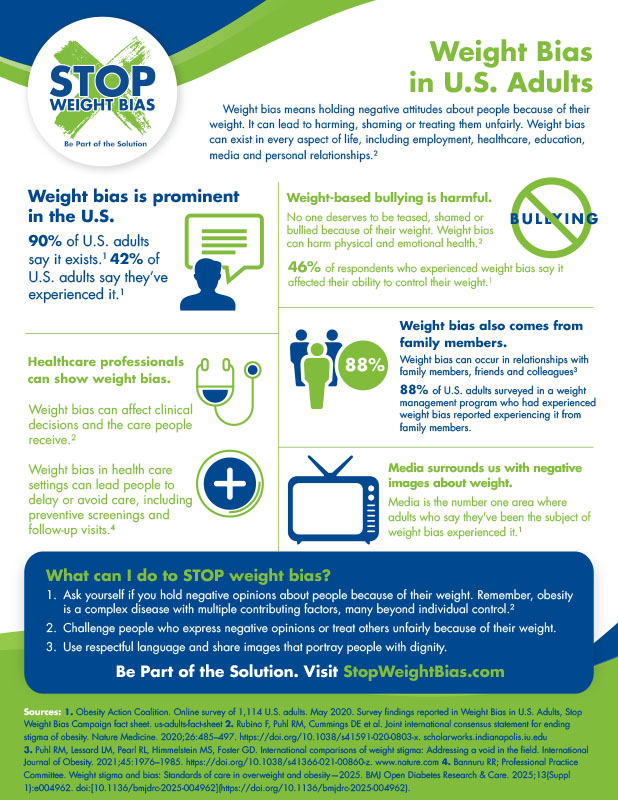
Weight bias means holding negative attitudes about people because of their weight. It can lead to harming,…
Read More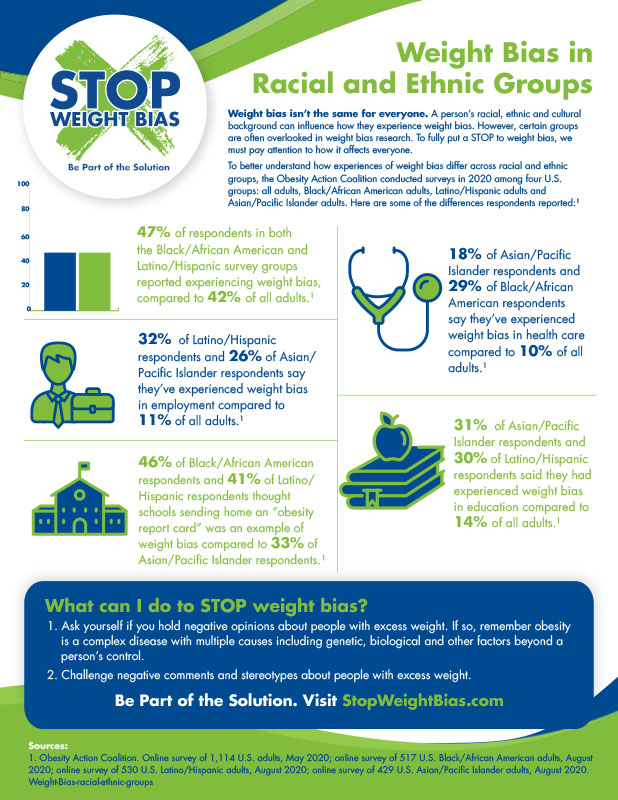
Weight bias isn’t the same for everyone. A person’s racial, ethnic and cultural background can influence how…
Read More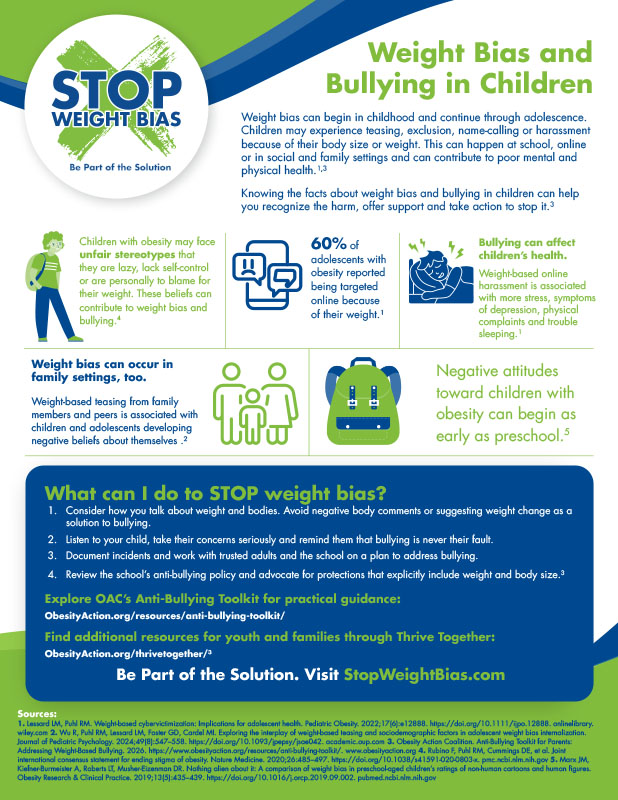
Weight bias can begin in childhood and continue through adolescence. Children may experience teasing, exclusion, name-calling or…
Read More