 Login


365 Days of Impact: The Difference We Make Together

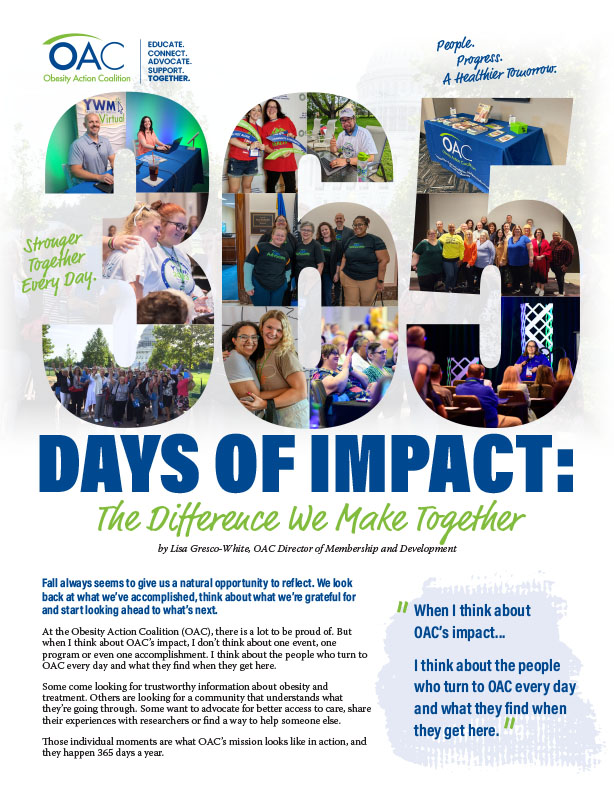
by Lisa Gresco-White, OAC Director of Membership and Development
Fall 2026
Fall always seems to give us a natural opportunity to reflect. We look back at what we’ve accomplished, think about what we’re grateful for and start looking ahead to what’s next.
At the Obesity Action Coalition (OAC), there is a lot to be proud of. But when I think about OAC’s impact, I don’t think about one event, one program or even one accomplishment. I think about the people who turn to OAC every day and what they find when they get here.
Some come looking for trustworthy information about obesity and treatment. Others are looking for a community that understands what they’re going through. Some want to advocate for better access to care, share their experiences with researchers or find a way to help someone else.
Those individual moments are what OAC’s mission looks like in action, and they happen 365 days a year.
It Often Starts With a Question
For many people, their first interaction with OAC begins when they are looking for answers. They may be trying to understand obesity, explore treatment options, prepare for a conversation with a health care provider or determine which information they can trust.
Obesity is a complex, chronic disease, but a tremendous amount of misinformation still surrounds it. OAC works to make that information easier to navigate.
Through Weight Matters Magazine, online resources, digital and print education, and events such as the Your Weight Matters National Convention and Regional events, we provide science-based information people can trust and use.
But we also know that people often need more than information.
People Need People
Living with obesity can feel isolating, especially for those who have experienced weight bias, discrimination or frustration when trying to access care. Through OAC Community, Community+, our in-person and virtual events, and other opportunities throughout the year, people can connect with others who understand many of those experiences.
Sometimes, finding OAC means learning something new. Other times, it means realizing you’re not the only one going through it. Both matter.
CONNECT WITH OAC
Join the OAC Community and connect with people across the country who are learning, sharing and supporting one another.
Your Experience Can Create Change
One of the things I value most about OAC is that we don’t just provide information to people affected by obesity. We create opportunities for them to be part of the work.
Advocacy is a great example. OAC gives people tools and opportunities to speak up about issues that affect their lives, from access to evidence-based obesity care to weight bias and discrimination. A policy issue looks very different when a policymaker hears directly from someone who has lived it, and that same lived experience is equally important in research.
Researchers, health care companies and other organizations increasingly recognize that people with lived experience need to be included in conversations about obesity research and care.
Through OAC’s Lived Experience Research Collaborative (LERC), focus groups, listening sessions, patient panels and other research opportunities, members of our community are helping bring the patient voice directly into that work.
People affected by obesity shouldn’t just be the subject of research, policy and health care decisions. Their lived experiences should help shape them.
USE YOUR VOICE
Advocate. Share your story. Participate in research. Your experience can help create change.
Sometimes Impact Means Opening a Door
There are also times when OAC can help remove a barrier. Each year, scholarships help people attend the Your Weight Matters National Convention who might not otherwise be able to participate. The value of a scholarship extends beyond registration and travel. For someone attending for the first time, the Convention may be where they finally find answers to questions they have had for years, meet others who understand their experiences, learn to advocate for themselves or discover a way to become more involved.
Through the RECOVER Program, OAC also helps people who need assistance obtaining vitamins following bariatric surgery.
These programs are very different, but share a common purpose: helping people access something they need.
It’s Not About a List of Programs
We could fill these pages with everything OAC does, from the Convention, education and Community to advocacy, research, scholarships and support programs. But that’s not really the story. The story is what happens because those things exist.
A resource becomes understanding. A scholarship becomes an opportunity. A community becomes belonging. An advocacy action becomes a voice. A research opportunity becomes a seat at the table.
That’s impact.
And none of it happens without people choosing to be part of OAC. Some participate, volunteer or advocate. Some share their experiences or give. Some do all of those things over many years. Every one of those relationships helps make OAC stronger.
How OAC’s Work Is Funded Matters
This is also the time of year when we talk about giving, and it’s important to explain why individual giving matters to OAC. We are fortunate to have corporate partners and sponsors who believe in our mission. Their support advances specific programs, educational initiatives, events, research collaborations and other opportunities that might not be possible without them.
Individual giving serves a different purpose. An unrestricted charitable gift invests directly in OAC and its mission. Because those dollars aren’t tied to one event or specific program, they give OAC something incredibly important: flexibility.
Not every need fits into a sponsorship or grant. Unexpected opportunities arise. Community needs change. Technology needs to improve. Successful programs need room to grow, and new ideas may need an initial investment to become something bigger. Individual giving allows OAC to respond to those needs and opportunities. It also shows that our community believes in this work.
Whether it’s a $10 gift, a $50 gift, a $100 gift, a monthly contribution or a future gift through an estate plan, every gift matters. Each represents someone saying, “I believe this mission is worth investing in.”
Corporate support and individual giving both play important roles in OAC’s success. They simply do so in different ways.
We need both.
MAKE AN IMPACT
Make a gift to OAC and help us continue educating, connecting, advocating and creating opportunities for people affected by obesity.
Giving Isn’t the Only Way to Give Back
While we’re talking about giving, I also want to make one thing clear: Supporting OAC doesn’t always mean making a financial contribution. There are many ways to make a difference. You can join OAC Community or Community+, take advocacy action, share your lived experience with researchers, volunteer, attend an OAC event, share a resource, participate in the OAC Step Challenge or tell your story. Your relationship with OAC may begin with one of these opportunities and grow into something completely different over time.
That’s exactly how community works.
TAKE THE CHALLENGE
Join us for the OAC Step Challenge this October and turn intentional movement into impact.
Creating an Impact Beyond Today
For some people, supporting OAC also means thinking about the future.
Including OAC in a will or naming OAC as a beneficiary is another way to make a lasting difference. You don’t need an enormous estate to leave a meaningful legacy. It’s simply a decision that something important to you today should continue making a difference tomorrow.
Legacy gifts can help ensure that future generations have an OAC to turn to for credible education, community, advocacy and support.
PLAN FOR THE FUTURE
Learn more about ways to include OAC in your future plans and create an impact that lasts.
There Is Still More to Do
We have accomplished a lot, but there is still more to do. There are still people who don’t know OAC exists, who are trying to understand obesity without reliable information, who feel alone or who are struggling to access science-based care. Policymakers still need to hear directly from people affected by obesity, researchers need lived experience at the table and there are opportunities ahead that we haven’t even imagined yet. That’s why continuing to build a strong OAC matters.
What’s Your Next Step?
As we enter the fall giving season, I hope you’ll think about your own relationship with OAC. Maybe OAC helped you understand something you didn’t understand before. Maybe you found people who made you feel less alone. Maybe you attended the National Convention, became an advocate or participated in research. Maybe you’ve been part of this organization for years. Whatever brought you here, you are part of what happens next. So, what’s your next step?
JOIN. GIVE. ADVOCATE. PARTICIPATE. VOLUNTEER. CONNECT.
There isn’t one right way to be involved. Find the one that’s right for you.
When more people choose to participate, advocate, connect and give, OAC becomes stronger, allowing us to reach more people, elevate more voices and create more opportunities for people affected by obesity. OAC’s impact doesn’t happen during one event, one campaign or one season.
It happens 365 days a year. And it happens because people like you choose to be part of it.
Find your next way to get involved with OAC.
About the Author:
Lisa Gresco-White is OAC’s Director of Membership & Development, where she leads efforts to grow and support the organization’s membership through programs like the Sponsored Member Program and Corporate Council. She also oversees fundraising, donor engagement, planned giving and volunteer involvement to strengthen the community and advance OAC’s mission.
Related Resources

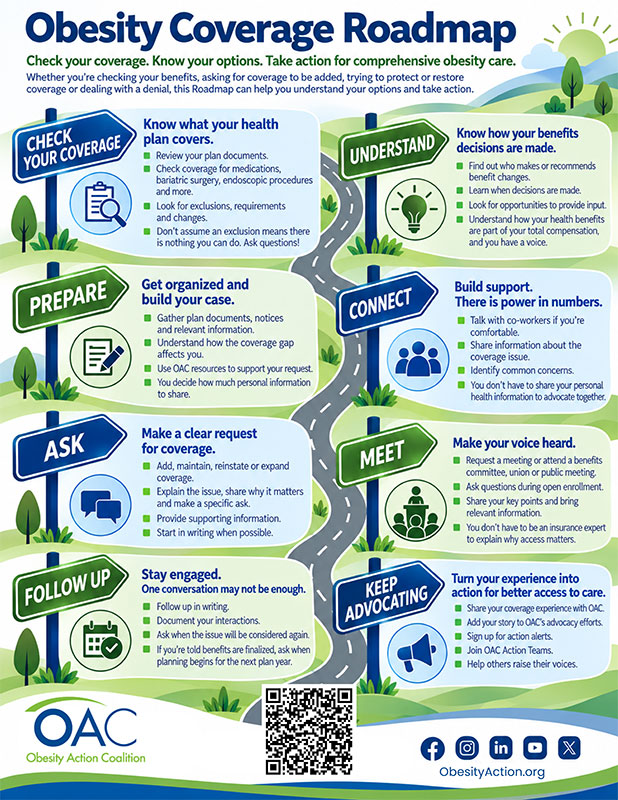
Check your coverage. Know your options. Take action for comprehensive obesity care. Whether you’re checking your benefits,…
View Guide
OAC’s white paper shares findings from a patient survey on prescription companion apps for obesity medications. Explore…
View Guide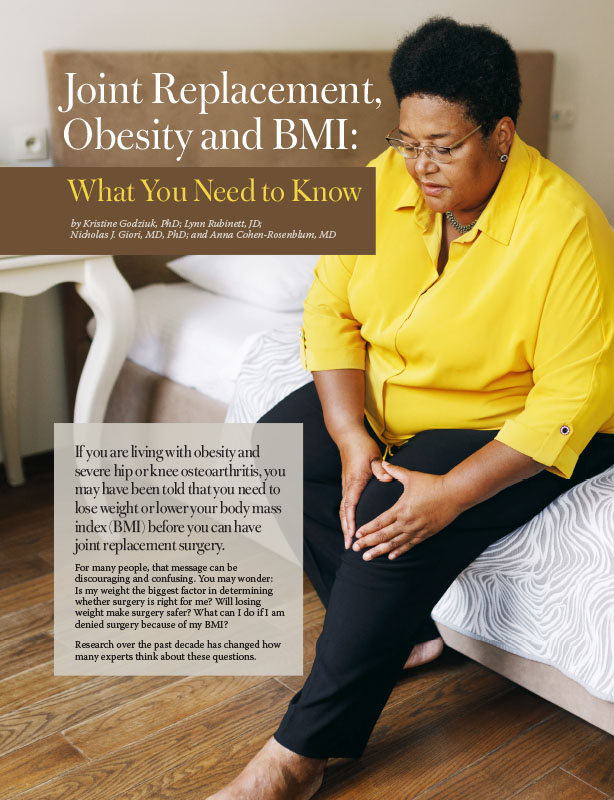
by Kristine Godziuk, PhD; Lynn Rubinett, JD; Nicholas J. Giori, MD, PhD; and Anna Cohen-Rosenblum, MD Fall…
Read Article